
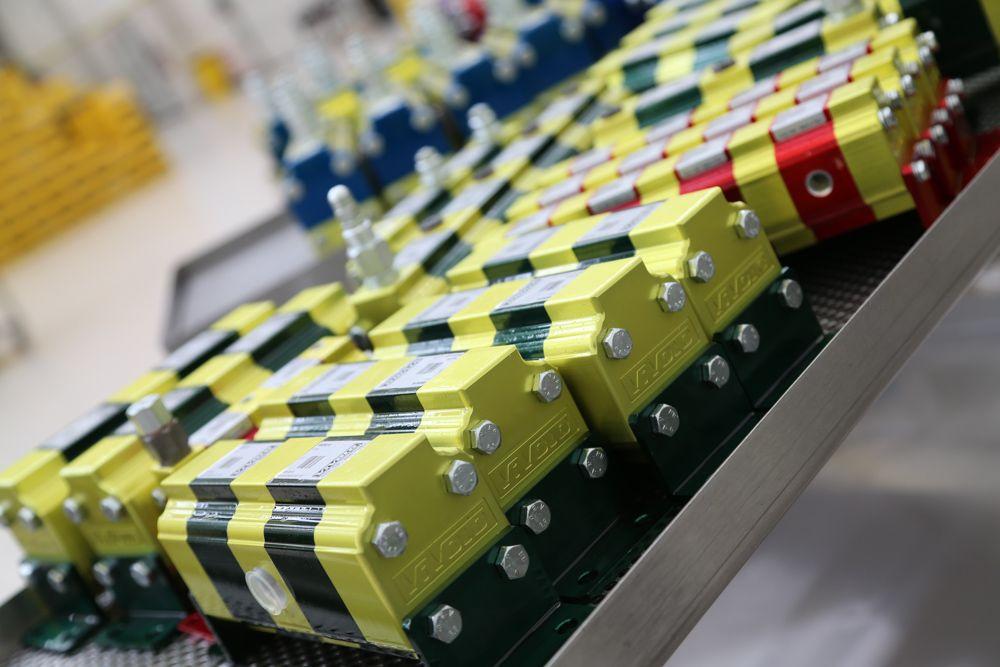
In the complex world of manufacturing and heavy machinery operations, achieving precise control over fluid distribution is critical. Flow dividers play a pivotal role in ensuring machinery operates efficiently, consistently, and safely. From construction equipment to specialized food processing lines, these devices provide an often-overlooked yet essential function. Understanding how flow dividers work, their benefits, and their applications can help engineers and operators maximize system performance while reducing downtime.
Understanding Flow Dividers
Flow dividers are hydraulic components designed to split a single input flow into two or more output flows, each with a predetermined ratio. They ensure that multiple actuators or machines receive the right amount of fluid simultaneously, even when system pressures fluctuate. Unlike simple manifolds, flow dividers provide precise flow distribution without the need for electronic sensors or complex control systems, making them reliable and cost-effective for demanding industrial applications.
How Flow Dividers Work
Flow dividers operate using a combination of pistons, gears, or rotary mechanisms. When hydraulic fluid enters the device, it is distributed proportionally across multiple outputs. There are two main types: fixed ratio and proportional. Fixed ratio flow dividers allocate fluid in a predetermined split, ideal for tasks requiring consistent operation. Proportional flow dividers, on the other hand, adjust the split based on system demand, offering flexibility for dynamic operations.
This precise control ensures synchronized movement across machinery, reducing wear and tear, improving accuracy, and enhancing operational safety. In manufacturing environments where multiple cylinders or motors must operate in unison, the importance of a well-designed flow divider cannot be overstated.
Applications in Heavy Machinery
Flow dividers are indispensable in heavy machinery, where multiple actuators often need to move simultaneously. For instance, in construction equipment such as excavators and loaders, hydraulic cylinders must lift, tilt, and extend at precisely controlled rates. Unequal fluid distribution could result in uneven movement, posing safety risks and reducing efficiency. Flow dividers prevent these issues by maintaining balanced fluid flow, allowing operators to achieve smooth and predictable motion.
Additionally, flow dividers are critical in industrial presses, injection molding machines, and robotic assembly systems. Here, synchronization between multiple hydraulic cylinders ensures consistent product quality. For example, in presses, uneven movement can damage molds or compromise product integrity, whereas synchronized operation guarantees uniform pressure and accurate results.
Enhancing Food Processing Systems with Flow Dividers
Beyond traditional manufacturing, flow dividers play a significant role in specialized industries such as food processing. Chocolate transfer pumps are a prime example where precise fluid control is crucial. These pumps are used to transport chocolate through a production line, and maintaining consistent flow is essential to prevent clogging, uneven coating, or variations in product quality.
Integrating flow dividers in chocolate transfer systems ensures that multiple lines receive the exact flow rate required, enhancing efficiency and consistency. This precision minimizes product waste and reduces the need for frequent manual adjustments, which is particularly important in high-volume production environments.
Optimizing Chocolate Transfer Pumps
In chocolate processing, maintaining the ideal viscosity and temperature is essential for smooth operations. Flow dividers help by ensuring that chocolate transfer pumps deliver an even flow to multiple processing points simultaneously. This results in uniform filling, coating, and tempering, which are critical for achieving high-quality chocolate products. For manufacturers, this translates to lower operational costs, reduced downtime, and improved product consistency.
Benefits of Flow Dividers in Manufacturing
Implementing flow dividers in industrial and heavy machinery systems offers numerous advantages. Some of the most significant benefits include:
- Precision and Accuracy: Flow dividers guarantee that multiple actuators operate at the correct rate, even under fluctuating system pressures. This precision ensures consistent output quality and synchronized machine performance.
- Reduced Wear and Tear: Uneven fluid distribution can lead to premature component failure. Flow dividers prevent overloading specific actuators, extending the life of machinery.
- Energy Efficiency: By evenly distributing hydraulic fluid, flow dividers reduce energy waste. Pumps operate more efficiently, lowering overall energy consumption and operational costs.
- Simplified System Design: Flow dividers eliminate the need for complex electronic controls in many applications, simplifying maintenance and reducing potential points of failure.
- Enhanced Safety: In heavy machinery, synchronized movement is critical for operator safety. Flow dividers ensure that machines respond predictably, reducing the risk of accidents.
Choosing the Right Flow Divider
Selecting the right flow divider depends on factors such as system flow rate, pressure, number of actuators, and required synchronization. Engineers must consider both fixed ratio and proportional options based on operational needs. Materials and sealing technology are also crucial, especially in food processing or environments with corrosive fluids, where hygiene and durability are essential.
In addition, understanding the compatibility of flow dividers with devices like chocolate transfer pumps or heavy hydraulic systems ensures optimal performance. Integrating these components into an existing system requires careful planning, including correct sizing, pressure rating, and mounting configuration.
Maintenance and Troubleshooting
Although flow dividers are highly reliable, regular maintenance is necessary to maintain efficiency and prevent downtime. Key maintenance practices include:
- Periodic Inspection: Check for wear, leaks, and proper alignment of components.
- Fluid Quality Management: Contaminated hydraulic fluids can damage flow dividers. Regularly monitor fluid cleanliness and replace filters as needed.
- Lubrication and Sealing: Ensure that moving parts are adequately lubricated and seals are intact to prevent leaks or uneven flow.
- System Monitoring: Observe actuator performance for signs of flow imbalance, which may indicate a need for servicing or adjustment.
Timely maintenance not only extends the lifespan of flow dividers but also safeguards the performance of associated machinery, including chocolate transfer pumps and other critical industrial systems.
Future Trends in Flow Divider Technology
Advances in fluid control technology are pushing flow dividers toward even greater efficiency and versatility. Modern systems increasingly integrate sensors and monitoring solutions that provide real-time feedback on fluid distribution. These innovations allow engineers to fine-tune operations and detect potential issues before they impact production.
Furthermore, new materials and compact designs are making flow dividers more suitable for high-speed and precision applications, expanding their role beyond traditional heavy machinery. Industries such as robotics, food processing, and additive manufacturing are beginning to benefit from the combination of traditional hydraulic control with modern monitoring technology.
Flow dividers are an essential component in both manufacturing and heavy machinery operations. Their ability to distribute hydraulic fluid precisely and reliably ensures synchronized movement, consistent product quality, and efficient system performance. Whether used to coordinate hydraulic cylinders in construction equipment or to optimize chocolate transfer pumps in food production lines, flow dividers provide critical functionality that enhances productivity, safety, and cost-efficiency.
Understanding their operation, applications, and maintenance requirements enables engineers and operators to harness their full potential. As industries continue to evolve and demand greater precision and efficiency, the role of flow dividers will only grow, making them an indispensable tool in modern industrial operations.
