
11
There is a distinct, exhausting irony in eating what feels like an impeccably healthy meal—a crisp salad piled with grilled chicken, apples, broccoli, and garlic-infused vinaigrette—only to spend the next four hours doubled over with debilitating abdominal cramps and visible bloating. For millions of people navigating chronic digestive trouble, standard dietary advice often falls flat. Whole grains, legumes, and fresh produce are celebrated as nutritional gold standards, yet they frequently trigger the very symptoms people try to resolve.
When standard clean eating fails, the low-FODMAP diet is often the clinical framework practitioners turn to next. However, the protocol carries a notorious reputation for being bewilderingly complex, overwhelmingly restrictive, and difficult to manage without losing your sanity.
It does not have to be that way. Once you understand the digestive mechanics behind how these specific carbohydrates behave in your gastrointestinal tract, the rules shift from arbitrary restrictions into a logical, highly effective diagnostic tool.
What Are FODMAPs and Why Do They Cause Distress?
FODMAP is an acronym for Fermentable Oligosaccharides, Disaccharides, Monosaccharides, and Polyols. These are specific short-chain carbohydrates and sugar alcohols that are poorly absorbed by the human small intestine.
In individuals with healthy gut motility and typical visceral sensitivity, these compounds pass through the digestive tract with minimal fuss. For those with irritable bowel syndrome, visceral hypersensitivity, or altered motility, they create two distinct physiological bottlenecks.
First, because these small sugar molecules cannot be efficiently transported across the intestinal wall, they remain sitting in the gut lumen, where they exert an osmotic pull. They literally draw excess water directly into the small intestine, leading to rapid distension, cramping, and watery stool.
Second, once these unabsorbed molecules travel into the large intestine, they encounter trillions of hungry colonic bacteria. The microbes view these carbohydrates as an immediate, fast-fermenting fuel source. As the bacteria consume the sugars, they produce significant volumes of hydrogen, methane, and carbon dioxide gas. In a sensitive system, that rapid gas expansion stretches the intestinal walls, triggering acute pain, severe bloating, and disrupted bowel habits.
The Five Chemical Culprits
To navigate your grocery runs without panic, you need to recognize the specific carbohydrate families that fall under the broader umbrella.
Fructans and Galacto-Oligosaccharides (Oligosaccharides)
These are chains of carbohydrate molecules that humans completely lack the enzymes to break down. Fructans are found in high concentrations in alliums like garlic and onions, as well as in wheat, rye, and barley. Galacto-oligosaccharides, commonly referred to as GOS, reside primarily in legumes, lentils, chickpeas, and certain nuts like cashews and pistachios.
Lactose (Disaccharides)
Lactose is the natural two-molecule sugar found in animal dairy products like cow’s milk, soft cheeses, yogurt, and ice cream. Digesting it requires the brush-border enzyme lactase. If your gut produces insufficient quantities of this enzyme, lactose passes directly to the colon unabsorbed.
Excess Fructose (Monosaccharides)
Fructose is the simple sugar found in fruits, honey, and high-fructose corn syrup. When fructose is balanced by an equal amount of glucose, the body absorbs it relatively easily. Trouble begins when fructose levels exceed glucose, such as in apples, pears, mangoes, and agave nectar, overwhelming the transport mechanisms in the intestinal lining.
Polyols (Sugar Alcohols)
Polyols include sorbitol and mannitol, which occur naturally in stone fruits like cherries, plums, and peaches, as well as in mushrooms and cauliflower. They are also synthesized commercially as low-calorie sweeteners—such as xylitol, maltitol, and isomalt—and commonly lurk in sugar-free gums, mints, and packaged protein snacks.
The Three Phases of the Protocol
The single biggest mistake beginners make is treating the low-FODMAP framework as a permanent lifestyle. It is fundamentally an investigative elimination-and-reintroduction protocol, not a forever diet. Remaining on an ultra-strict low-FODMAP diet indefinitely can starve beneficial bifidobacteria in your microbiome, inadvertently worsening gut health over the long run.
Phase 1: Elimination
The initial elimination window typically spans two to six weeks. During this period, you temporarily remove all high-FODMAP foods, swapping them for biochemically safe alternatives. The objective is not to cure your digestive system overnight, but rather to quiet chronic inflammation, calm nerve sensitivity, and establish a clear, symptom-free baseline. If your symptoms do not noticeably improve within six weeks of strict adherence, your digestive issues are likely driven by something other than carbohydrate malabsorption.
Phase 2: Systematic Reintroduction
Once your digestive tract feels settled, you transition into the most critical part of the process: challenging individual carbohydrate groups. You test one specific FODMAP subgroup at a time over three days, gradually escalating the portion size each day while keeping the rest of your meals strictly low-FODMAP.
For instance, you might test sorbitol by eating a small slice of avocado on day one, half an avocado on day two, and a whole avocado on day three, followed by a three-day washout period where you observe any delayed reactions. This deliberate method isolates your exact physiological triggers rather than forcing you to guess.
Phase 3: Personalization
After testing every category, you enter the integration phase. Most individuals discover they are intensely reactive to only one or two specific subcategories while tolerating the rest without an issue. You systematically reintroduce all the foods that passed testing, creating an expansive, nutritionally diverse diet that only excludes your personal triggers.
Common Beginner Traps and How to Bypass Them
Adopting this protocol requires an eye for detail, as seemingly harmless kitchen habits can quietly undermine your progress.
The Problem of FODMAP Stacking
Many foods are considered low-FODMAP only up to a specific weight threshold. For example, a small serving of canned lentils or a modest handful of green beans contains a small enough quantity of fermentable carbohydrates to avoid triggering distress.
However, if you combine five different foods that each sit near their upper threshold within a single meal, you produce what clinicians refer to as FODMAP stacking. The cumulative volume of fermentable sugars overloads your intestinal transporters just as thoroughly as a large serving of a high-FODMAP food would. Spacing your meals three to four hours apart allows your digestive system to process each load without compounding.
The Allium Conundrum
Onions and garlic are ubiquitous in modern cooking, hiding inside stocks, salad dressings, spice rubs, and marinades. Because they contain concentrated fructans, even a pinch of garlic powder can provoke intense symptoms in sensitive individuals.
Fortunately, basic food chemistry offers an elegant workaround: fructans are water-soluble, but fat-insoluble. If you simmer whole garlic cloves in warm olive oil, the fat extracts the aromatic, flavorful compounds without absorbing any of the problematic fructan sugars. As long as you strain out and discard every piece of solid garlic tissue before cooking, garlic-infused olive oil is completely safe to consume.
Hidden Additives in Packaged Health Foods
Processed foods frequently incorporate extracted prebiotic fibers to artificially boost nutritional claims. Scan ingredient labels carefully for chicory root fiber, inulin, Jerusalem artichoke extract, and apple fiber. While these are marketed as gut-friendly prebiotics for the general public, they are concentrated fructans that act like fuel on a fire for anyone in the middle of an elimination phase.
Building a Dependable Everyday Pantry
Surviving the initial elimination phase comes down to having satisfying, reliable ingredients readily on hand so you never feel deprived.
Safe Grains and Carbohydrates
You do not need to give up carbohydrates entirely. Plain white and brown rice, basmati, jasmine, and wild rice are naturally safe foundations. Quinoa, polenta, certified gluten-free rolled oats, and potatoes of all varieties provide grounding, filling energy.
When it comes to bread, authentic, slow-fermented sourdough made from wheat flour is frequently well tolerated. The wild yeasts and lactobacilli present in traditional sourdough starters break down and consume the naturally occurring fructans during long twenty-four-hour fermentation cycles, essentially predigesting the offending carbohydrates for you.
Proteins and Dairy Substitutes
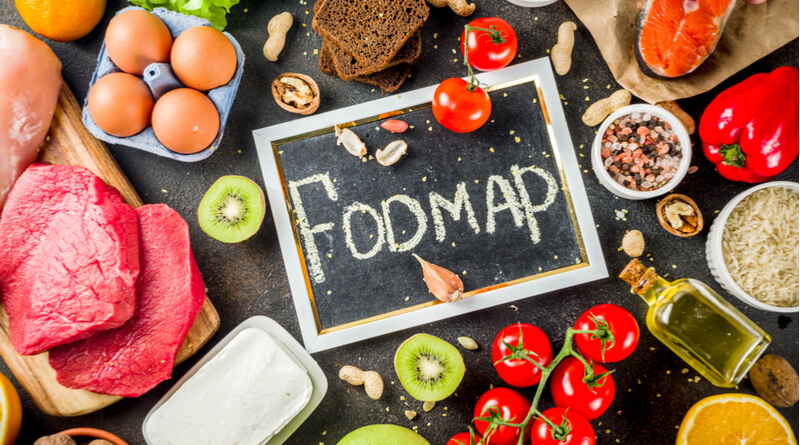
Pure proteins—such as unmarinated chicken, grass-fed beef, pork, eggs, and fresh seafood—contain zero carbohydrates and are naturally free of FODMAPs.
For plant-based eaters, firm and extra-firm tofu are safe because the manufacturing process presses out the water-soluble carbohydrates in the whey. Silken tofu, conversely, retains that liquid and remains high in GOS.
When navigating dairy, opt for commercially prepared lactose-free milk and yogurts, or lean on naturally aged hard cheeses like sharp cheddar, parmesan, and Swiss, where the aging process reduces the residual lactose to negligible traces.
Flavor Elevators Without the Pain
A restricted diet never has to taste bland. You can build complex, punchy flavor profiles using the green tops of scallions and leeks, fresh chives, freshly grated ginger, lemongrass, cilantro, basil, and citrus juices. Spices like cumin, smoked paprika, turmeric, and cracked black pepper are naturally free of fermentable sugars and help create vibrant, memorable dishes that feel anything like medical fare.
Approaching the low-FODMAP diet with patience, scientific curiosity, and the right culinary tools turns a frustrating medical recommendation into an empowering diagnostic blueprint. By taking control of the process step by step, you can finally quiet digestive discomfort, demystify your personal biology, and build a lasting, confident relationship with the food on your plate.
